Showing posts with label Incantato Destinations. Show all posts

Monday, March 17, 2014

Austria: Another Incantato Favorite

The Federal State of Austria,located in central Europe, is a very diverse country for its comparatively small size. Ruled by the Habsburg kings and emperors for almost seven centuries, the Austrian culture absorbed many Roman, Slav and Hungarian influences, thus creating a unique cultural blend. Even though around 95% of the population does speak German, there are a number of very pronounced local dialects that make Austrians difficult to understand even for native German speakers. Additionally, due to the various foreign influences, many things have different names in Austria than in other German-speaking countries such as Germany.
Aside from Austria's cultural and natural diversity, there is also a rich music tradition to be found. Austria was and is a world-renowned center for music, especially known for the period of Viennese Classicists. These include composers such as Joseph Haydn, who moved to Vienna in 1790 and was the court composer. Wolfgang Amadeus Mozart also lived and worked in Vienna, as did Ludwig van Beethoven, although he was originally from Germany. Moreover, these composers' works later guided 19th-century composers such as Franz Schubert, Johann Strauss, Anton Bruckner, and Gustav Mahler. Vienna's central cemetery is also well worth a visit for any classical music-lover, as people buried here include Mozart, Beethoven, Schubert, Strauss (father and son), Bruckner, Brahms, and Gluck.

Wednesday, February 12, 2014

The artist-city of Gmuend in Carinthia, Austria welcomes the Mater Dei HS Choirs

If you have checked out our Facebook page, it is no surprise that Incantato Concert Tours is enchanted with Carinthia - Austria's most musical state.

When traveling with the MDHS Choirs on the Enchanting Easter Tour 2014, you will visit the city of Gmuend. The town is located in northwestern Waldviertel in the Austrian state of Lower Austria. The development of the town, first mentioned in a 1208 deed, was decisively pushed by the inauguration of the Emperor Franz Joseph Railway from Vienna to Prague in 1869. By the 1919 Treaty of Saint-Germain its northern part with the main station was awarded to Czechoslovakia, forming the new town of Velenice.

It is called town of the artists because culture, family fun and natural beauty are among the best you will find in this part of Austria. An extensive range of events and attractions make a great experience for everyone. The medieval town of Gmuend lies at the heart of the cultural center of the region. With its wonderfully preserved buildings and a program rich in art and cultural events. No trip to the region is complete without a visit to Gmuend.

The Old Castle (Alte Burg) presents the doyen of the Styrian art scene, the painter Gerald Brettschuh. His exhibition “In Arkadien” can be visited from April to September and introduces you to the Styrian wine route, to the people and the landscape of the artist´s home country. The in Gmuend living local artist Birgit Bachmann is showing her new color-oil-woodcuts and graphite pencil drawings from the end of September to the end of December.


All Mater Dei HS travelers will enjoy a special meal at the restaurant Alte Burg on Tuesday, April 22 and you will have a beautiful view over the region and try different traditional Austrian specialties including home-made Spaetzle (noodles) and Apple Strudel in this historic castle. 

Mater Dei HS students will discover the Pankratium in Gmuend, Austria with Incantato

Incantato Tours together with Kaerten Tourism planned a special activity for the MDHS travelers, they will discover the Pankratium in Gmuend. Have you ever thought about the possibility of "seeing" music? The Pankratium is called "House of Astonishment" and this has a reason, you will be able to get a playful cognitive access to the world of music, colors, shapes and movements. At numerous experimental stands visitors not only hear vibrations, but also see and feel them.

The diversity of the Water Sound Images developed by Alexander Lauterwasser is particularly impressive. Using an inimitable technique, the vibration creation process is made visible in the medium of water. By using water drums, metal plates, sonoscopes and a sound vessel you can create your own sound pattern, make your "individual sound" visible and take your sound image home with you.

Watch the video below and get a sneak peak what awaits you at the Pankratium:


Incantato presents: The Mater Dei High School Choir at the Duomo in Piazzola sul Brenta, Italy

The North-Italian comune Piazzola sul Brenta is in the Province of Padua in the Italian region Veneto, located about 45 km west of Venice and about 15 km northwest of Padua. In the heart of Piazzola sul Brenta are two wonderful Renaissance mansions called Villa Contarini and Villa Paccagnella, which were built by Andrea Palladio.

Piazzola Sul Brenta is a very musical city and hosts a series of summer festivals. Famous artists from all over the world such as Sting, 30 Seconds to Mars or Carlos Santana have been and performed there. The festival location is fantastic - the open air concerts are held in the beautiful circular Piazza in front of Villa Contarini. Below you can watch a video and enjoy the stunning architecture of it.


The MDHS Choir under the direction of Mr. Scott Melvin is going to perform in the city's most striking building, the beautiful Duomo (engl. cathedral) of Piazzola sul Brenta, which was built between 1914 and 1926, with a local choir. If you are curious and would like to take a sneak peak into this confirmed Incantato Concert Tours prime venue, then have a look at this video.


Wednesday, September 4, 2013

Incantato Tours welcomes you to beautiful Venice, Italy

Venice is one of the few cities in the world that can be truly described as unique. Surviving against all odds on a series of low mud banks in the Adriatic Sea, this northeastern Italian city has been called the "Gateway to the Orient".
Venice became an independent Byzantine providence in the 10th century and in 1204 it gained significant wealth and power through the trading routes between the East and the West. During the Middle Ages, the city was able to expand its influence throughout the Mediterranean all the way to present-day Istanbul. This immense wealth was celebrated in the art and architecture around the city that can still be seen today. 
The riches of St. Mark's alone demonstrate Venice's great position in the world from the 12th to the 14th centuries. However, the city finally fell to Napoleon in 1797 and joined the Kingdom of Italy in 1866. In the last 200 years of Venice's history, little has been altered as so many of the historical sights are still admired today. 
One of the most famous sights is the Rialto Bridge (see picture above), which offers beautiful views of the Canal Grande and marks the heart of the city. This area was one of the first in Venice to be inhabited and it remains one of the city's busiest and most bustling areas. Completed in 1591, this bridge was the only means of crosse the Grand Canal until 1854, when the Accademia bridge was built. 
Described by Napoleon as the most elegant drawing room in Europe, the other favorite in Venice is the Piazzo San Marco with two of the city's most important historic sights: the Basilica and the Palazzo Ducale. Founded in the 9th century, the Palazzo once served as the home to Venice's rulers and to the offices of State. The Basilica, once the doge's private chapel, was built on a Greek cross plan and crowned with five massive domes. Today, it is a magnificent example of an Eastern and Western architectural blend. 

Welcome to Bella Italia with Incantato Tours


Italy has been, since antiquity, the centre of history, culture and art. The museums, collections and archaeological sites reveal countless tokens of the past and the many civilizations that have passed across this country, evidence of which is still inextricably woven into the present day landscape.

Artistic wonders can be found everywhere, and every corner of the country holds countless and wonderful surprises. The artistic and cultural heritage is one of the most valuable in the world. Italy has more cultural UNESCO World Heritage Sites than any other country. Rome, Florence, Assisi, Venice, Siena, Pisa, and Naples are its most renowned cities of art, but the whole country can boast towns of breathtaking beauty, as these numbers demonstrate: 95,000 monumental churches, 40,000 forts and castles, 30,000 historical residences with 4,000 gardens, 36,000 archives and libraries, 20,000 historical cities and towns, 5,600 museums and archaeological sites, and 1,500 convents.

Tourists can explore and discover the private residences of ancient and noble families; visit world famous museums such as the Uffizi Gallery in Florence, the Capitoline Museums in Rome, or the Brera Art Gallery in Milan; explore impressive archaeological sites, such as Pompeii and Herculaneum, to immerse themselves in an exciting, grandiose past. That is by no means all - there are numerous cultural, artistic, and musical events that animate Italian life.

Italy offers a rich combination of masterpieces from different areas, blending landscape and culture, history and art, architecture and city planning - it offers an exciting journey through time, from the Ancient Greeks and Romans to the present day, which is also filled by a wealth of art and culture.


Information courtesy of http://www.italia.it/

Slovenia Excursion: Lake Bled

The fertile land, the protective shelter of the castle hill and the island, have always invited the settlement of the Bled area. The first, and still rare traces of humans in Bled, date back to the Stone Age.

The lake is located in the Julian Alps in northwestern Slovenia, where it adjoins the town of Bled. The area is a popular tourist destination. The lake is 35 km (22 mi) from Ljubljana International Airport and 55 km (34 mi) from the capital city, Ljubljana.

For a video of the church bells ringing, click here.

Incantato proudly introduces You to Carinthia

Austria consists of nine provinces, the southern-most of which is Carinthia. Bordered by Slovenia and Italy in the south, Carinthia is known for the beauty of its landscape and pleasant climate due to its southern location. Also known as the lake district, the province boasts more than 200 warm swimming lakes pure enough to drink. 

Main towns include its capital, Klagenfurt, which was founded in the 12th century and is situated along the picturesque Woerther See, the warmest lake in the region. Additionally, international music festivals, architecture, painting, theatre and the Carinthian choirs all contribute in making this province a true cultural stage. One of the many musical festivals is known as the Carinthian Summer, which has been held every year since 1969. This festival for new music places an emphasis on the dialogue between composers, performers and audiences as a vital factor, and a central element of the festival is the performance of a church opera. Performances are held in various venues, one of which is the Ossiach Abbey. Built directly on the banks of Lake Ossiach, this abbey dates back to the 11th century and was furnished in the Baroque period.

Tuesday, March 29, 2011

Incantato performance venue for the Mater Dei High School Chorus: Recital at Montecassino Abbey


The Mater Dei High School Chorus, in addition to touring the site, presented a recital at the Montecassino Abbey on Tuesday, March 29, 2011 after bidding farewell to the Amalfi Coast.
Monte Cassino is a rocky mountain approximately 80 miles southeast of Rome. Saint Benedict of Nursia established his first monastery here, the source and foundation of the Benedictine Order, in 529. The monastery stands as one of the few territorial abbeys remaining within the Catholic Church.
According the Gregory the Great’s biography of Saint Benedict, the monastery was constructed on an older pagan sight, a temple of Apollo that originally crowned the hill. The biography claims that Benedict’s first act was to smash the sculpture of Apollo and destroy the pagan altar. He then reused the temple, dedicating it to Saint Martin, and built a new chapel which he dedicated to Saint John the Baptist. Once established at Monte Cassino, Benedict never left. There he penned the Benedictine Rule which ultimately became the founding principle of western monasticism. Monte Cassino became the model for future Benedictine developments throughout the world.
Unfortunately the Abbey has fallen target to numerous military insurgencies throughout the years, including the infamous 1944 Battle of Monte Cassino. On February 15, 1944, the Abbey was almost completely destroyed by Allied air-raids after being mistakenly identified as a German stronghold. In fact, the Abbey was being used as a refuge for women and children attempting to shield themselves from the war. The Abbey was rebuilt after the war, financed by the Italian State, and was reconsecrated by Pope Paul VI in 1964.

Friday, March 25, 2011

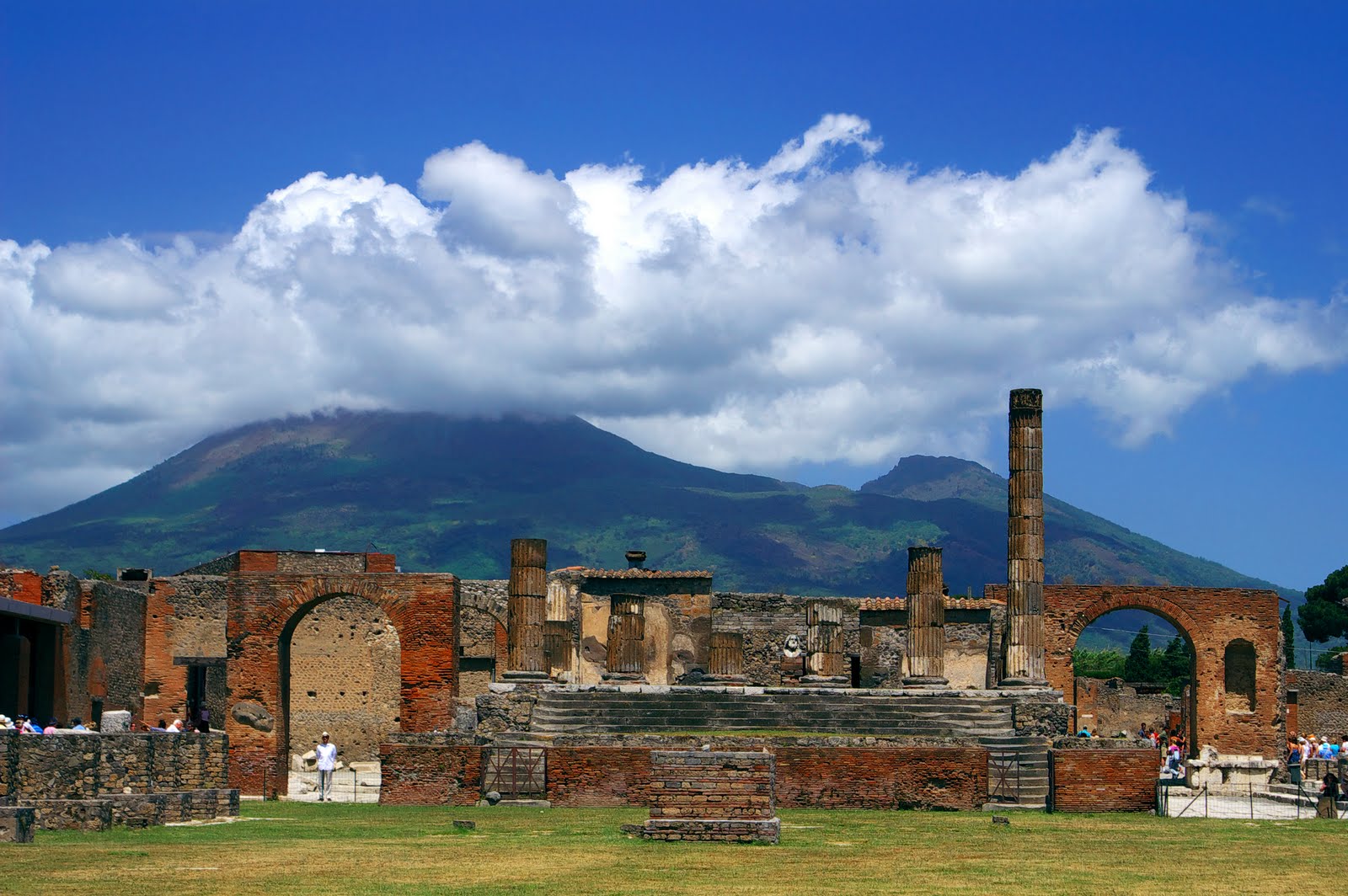
Sightseeing-Highlight today: Pompeii


Wondering what the Mater Dei HS Chorus is up to today? Pompeii is a ruined and partially buried Roman town-city near modern Naples in the Italian region of Campania, in the territory of the commune of Pompeii. Along with Herculaneum, its sister city, Pompeii was destroyed and completely buried during a long catastrophic eruption of the volcano Mount Vesuvius spanning two days in 79 AD. The volcano collapsed higher roof-lines and buried Pompeii under 20 m (66 ft) of ash and pumice, and it was lost for nearly 1,600 years before its accidental rediscovery in 1592. Since then, its excavation has provided an extraordinarily detailed insight into the life of a city at the height of the Roman Empire. Today, this UNESCO World Heritage Site is one of the most popular tourist attractions of Italy, with approximately 2,500,000 visitors every year.

Monday, March 7, 2011

Confirmed: Mater Dei High School to attend Papal Audience on March 30, 2011


The Mater Dei High School Performance Tour is confirmed to participate in the Papal Audience at the Vatican at 10:30AM on the morning of March 30, 2011.
Papal Audiences are held on Wednesdays if the Pope is in Rome, giving pilgrims and visitors the chance to "see the Pope" and receive the Papal Blessing or Apostolic Blessing from the successor of the Apostle Peter during their visit.
The Audience with the Pope consists of small teachings and readings mainly in Italian but also in English, French, German, Spanish, Polish, Portuguese and sometimes other languages depending on groups visiting.
The Pope will offer a greeting in each language and specially mention any visiting group such as choirs from various countries.
At the completion of the Audience, the Pope will join with the attendees in praying the Lord’s Prayer in Latin.
At the end of the Prayer, as Head of the Catholic Church, he will impart his Apostolic Blessing upon the crowd, which extends to loved ones who are sick and suffering, and also blesses any religious articles such as rosary beads that people have brought with them for the purpose of the blessing.
The Mater Dei High School Choir will most likely be given the opportunity to briefly sing for the General Audience this morning.

Confirmed: Mater Dei High School private tour of the Vatican- Saturday, April 2, 2011

The Mater Dei High School Chorus will take a special after-hours guided tour of the Vatican Museums and the Sistine Chapel on Saturday, April 2, 2011. The singers will also present a very special recital in the Sistine Chapel this evening.


The Vatican Museums are indisputably one of the finest collections of art in the world. Over the centuries, Papal patrons have commissioned renowned works such as the magnificent frescoes of Michelangelo in the Sistine Chapel, and those by Raphael in his stanze. The museums also host some of the most important sculptures from the ancient world, such as the Laocoon and the Apollo Belvedere. Incantato Tours is thrilled to offer the Mater Dei High School Chorus and friends the opportunity to see these works as they were originally viewed and contemplated by the Popes who created the Museums. A private after-hours visit during your 2011 Incantato Performance Tour to Italy is truly a once in a lifetime experience, a chance to have this astounding collection to yourself and fellow tour members for two hours.
Incantato's private visit to the Vatican Museums & Sistine Chapel will be led by a specialized docent/expert guide and is just open to members of your tour. We also provide headsets to everyone for a truly individual experience. This is an exceptional opportunity for an intimate visit and lecture on the Vatican and its impressive art collection without the press and chaos of the crowds. Last but not least, the choir has been granted permission to give a recital in the Sistine Chapel which is a an unforgettable experience - both for the singers and the audience.
Please note that not all galleries will be accessible to us during this after hours visit. The Pinacoteca and Egyptian collections are not available for viewing after closing hours. The opportunity to view the Belvedere Courtyard is also dependent on the route the Vatican guards allow us to take. We normally spend a significant amount of time (35-40 minutes) inside the Sistine Chapel and divide the rest of our time between the Gallery of Maps, Tapestry Gallery, and Raphael Rooms, including other collections as time and security permits.

Wednesday, October 13, 2010

Thursday, August 19, 2010

Welcome to Italy!

Italy is located partly on the European Continent and partly on the Italian Peninsula in Southern Europe and on the two largest islands in the Mediterranean Sea, Sicily and Sardinia. Italy shares its northern, Alpine boundary with France, Switzerland, Austria and Slovenia. The independent states of San Marino and the Vatican City are enclaves within the Italian Peninsula, and Campione d'Italia is an Italian exclave in Switzerland. The territory of Italy covers 301,338 km² and is influenced by a temperate seasonal climate. With 60.2 million inhabitants, it is the sixth most populous country in Europe, and the twenty-third most populous in the world.
The land known as Italy today has been the cradle of European cultures and peoples, such as the Etruscans and the Romans. Italy's capital, Rome, was for centuries the political centre of Western civilisation, as the capital of the Roman Empire. After its decline, Italy would endure numerous invasions by foreign peoples, from Germanic tribes such as the Lombards and Ostrogoths, to the Normans and later, the Byzantines, among others. Centuries later, Italy would become the birthplace of the Renaissance, an immensely fruitful intellectual movement that would prove to be integral in shaping the subsequent course of European thought.
Through much of its post-Roman history, Italy was fragmented into numerous kingdoms and city-states (such as the Kingdom of Sardinia, the Kingdom of the Two Sicilies and the Duchy of Milan), but was unified in 1861, a tumultuous period in history known as the "Risorgimento". In the late 19th century, through World War I, and to World War II, Italy possessed a colonial empire, which extended its rule to Libya, Eritrea, Italian Somaliland, Ethiopia, Albania, Rhodes, the Dodecanese and a concession in Tianjin, China.
Modern Italy is a democratic republic and the world's eighteenth most developed country, with the eighth or tenth highest quality of life index rating in the world. It is a founding member of what is now the European Union and North Atlantic Treaty Organization. Italy is also a member of the G8 and G20. It is a member state of the Organisation for Economic Co-operation and Development, the World Trade Organization, the Council of Europe, and the Western European Union as well. The country's European political, social and economic influence make it a major regional power, alongside the United Kingdom, France, Germany, and Russia, and Italy has been classified in a study, measuring hard power, as being the eleventh greatest worldwide national power. The country has a high public education level, high labor force, is a globalised nation, and also has 2009's sixth best international reputation. Italy also has the world's nineteenth highest life expectancy, and the world's second best healthcare system. It is the world's fifth most visited country, with over 43.7 million international arrivals, and boasts a long tradition and several achievements in the arts, science and technology, including the world's highest number of UNESCO World Heritage Sites to date.

Monday, April 19, 2010

About Capri


Capri is an Italian island in the Tyrrhenian Sea off the Sorrentine Peninsula, on the south side of the Gulf of Naples, in the Campania region of southern Italy. It has been a resort since the time of the Roman Republic. In the latter half of the 19th century, Capri became a popular resort for European artists, writers and other celebrities. John Singer Sargent and Frank Hyde are among the prominent artists who stayed on the island around the late 1870s. Sargent is best known for his series of portraits featuring the beautiful local model, Rosina Ferrara. Also in the 19th century, the natural scientist Ignazio Cerio catalogued the flora and fauna of the island. This work was continued by his son, the author and engineer Edwin Cerio, who wrote several books on life in Capri in the 20th century.

The picture is from the official homepage of the Capri tourism office.

Visit Maiori


Maiori is a town and community on the Amalfi coast in the province of Salerno (Campania, Italy). It has been a popular tourist resort since Roman times, with the longest unbroken stretch of beach on the Amalfi coastline. The origins of the town are unclear but the original name of the town was Reghinna Maior, in contrast to the neighbouring town, Minori, Reghinna Minor. All places along the coast were formed by alternating conquerors - such as the Etruscans or the Romans. Between 830 and 840, the places of the coast united to form a confederation of Amalfi States. In this Amalfi Sea Republic, the places between Lettere and Tramonti and between Cetara and Positano, along with the island of Capri, were united; and their inhabitants were all called Amalfitaner. At that time, each city retained its own name and administrative autonomy, but had a specific role in this federation. Later it became part of the Principality of Salerno, and then of the Kingdom of Naples, of which it followed the history until the 19th century.

City Facts about Vatican City

Vatican City, officially the State of the Vatican City, is a landlocked sovereign city-state whose territory consists of a walled enclave within the city of Rome, the capital city of Italy. It has an area of approximately 44 hectares, and a population of just over 800.
Vatican City is a city-state that came into existence in 1929. It is distinct from the Holy See, which dates back to early Christianity and is the main Episcopal see of 1.147 billion Latin and Eastern Catholic adherents around the globe. Ordinances of Vatican City are published in Italian; official documents of the Holy See are issued mainly in Latin. The two entities even have distinct passports: the Holy See, not being a country, only issues diplomatic and service passports; the state of Vatican City issues normal passports. In both cases the passports issued are very few.
Vatican City is an ecclesiastical or sacerdotal-monarchical state, ruled by the bishop of Rome - the Pope. The highest state functionaries are all Catholic clergymen of various nationalities. It is the sovereign territory of the Holy See (Sancta Sedes) and the location of the Pope's residence, referred to as the Apostolic Palace. The Popes have resided in the area that in 1929 became Vatican City since the return from Avignon in 1377.

City Facts about Rome

  • Rome's early history is shrouded in legend. According to Roman tradition, the city was founded by the twins Romulus and Remus on 21 April 753 BC.
  • Due to this centrality on many levels, the city has been nicknamed "Caput Mundi" (Latin for "Capital of the World") and "The Eternal City".
  • Its rich artistic heritage and vast amount of ancient, notably architectural and archaeological sites, contribute to the city's UNESCO World Heritage Sites.
  • Rome is the third-most-visited tourist destination in the European Union.
  • The city is also an important worldwide hub of the cinematic and filming industry, home to the important and large Cinecittà Studios, which saw the filming of several internationally acclaimed movies as well as television programmes.
  • The Rome metropolitan area has a GDP of €109.4 billion (US$ 149.14), and according to a 2008 study, the city is the world's 35th richest city by purchasing power.
  • The city hosted the 1960 Olympic Games and is also an official candidate for the 2020 Olympic Games.
  • Rome is an important centre for music, and it has an intense musical scene, including several prestigious music conservatories and theatres. It hosts the Accademia Nazionale di Santa Cecilia (founded in 1585), for which new concert halls have been built in the new Parco della Musica, one of the largest musical venues in the world.
  • A Jewish influence in the Italian dishes can be seen, as Jews have lived in Rome since the 1st century BCE. Examples of these include "Saltimbocca alla Romana" - a veal cutlet, Roman-style; topped with raw ham and sage and simmered with white wine and butter - and "Carciofi alla giudia" - artichokes fried in olive oil, typical of Roman Jewish cooking.

Incantato Tour Sight: Roman Forum in Rome

Touring Rome, the travelers of the Mater Dei High School will have a chance to visit the Roman Forum. It is a small open rectangle surrounded by the ruins of ancient government buildings at the center of the city of Rome. Citizens of the ancient city referred to this marketplace as the Forum Magnum, or simply the Forum. It was for centuries the center of Roman public life: the site of triumphal processions and elections, venue for public speeches and gladiatorial matches, and nucleus of commercial affairs. Here statues and monuments commemorated the city's great men. The teeming heart of ancient Rome, it has been called the most celebrated meeting place in the world, and in all history.
Located in the small valley between the Palatine and Capitoline Hills, the Forum today is a sprawling ruin of architectural fragments and intermittent archeological excavations attracting numerous sightseers. Many of the oldest and most important structures of the ancient city were located on or near the Forum. The Kingdom's earliest shrines and temples were located on the southeastern edge. These included the ancient former royal residence, the Regia (8th century BC), and the Temple of Vesta (7th century BC), as well as the surrounding complex of the Vestal Virgins, all of which were rebuilt after the rise of imperial Rome.